threshold, 2026
I am conscious of the persistence of antisemitism, both past and present. Old prejudices have not disappeared; they have adapted, finding new forms, new language and new ways to circulate. Ideas once confined to the margins increasingly enter public discourse, carrying echoes of histories that many hoped would never be repeated. Those echoes have travelled across continents and reached the place I call home.
Liminal spaces are places of transition, but they are also places of uncertainty. Standing before these doors, I find myself asking: which one leads to safety? Is there a safe place for Jewish people today, wherever they may reside? Or are we forever caught between arrival and departure, belonging and exclusion?
These thresholds are haunted by larger questions. Is there still a path towards positive change and hope, or are we witnessing the re-emergence of old hatreds in new forms? Does history move forward, or are we trapped in a corridor that leads us back towards the darkest chapters of the past?
Within this uncertainty, the antique sewing box becomes my refuge. It is both a hiding place and an anchor. As a repository of tools, materials and memories, it symbolises the work I do: the act of stitching, repairing and holding things together. In a world that feels fractured and unstable, the repetitive gesture of sewing offers a measure of control. The box exists as its own liminal space, between concealment and creation, vulnerability and resilience, a small sanctuary from the realities beyond its lid.
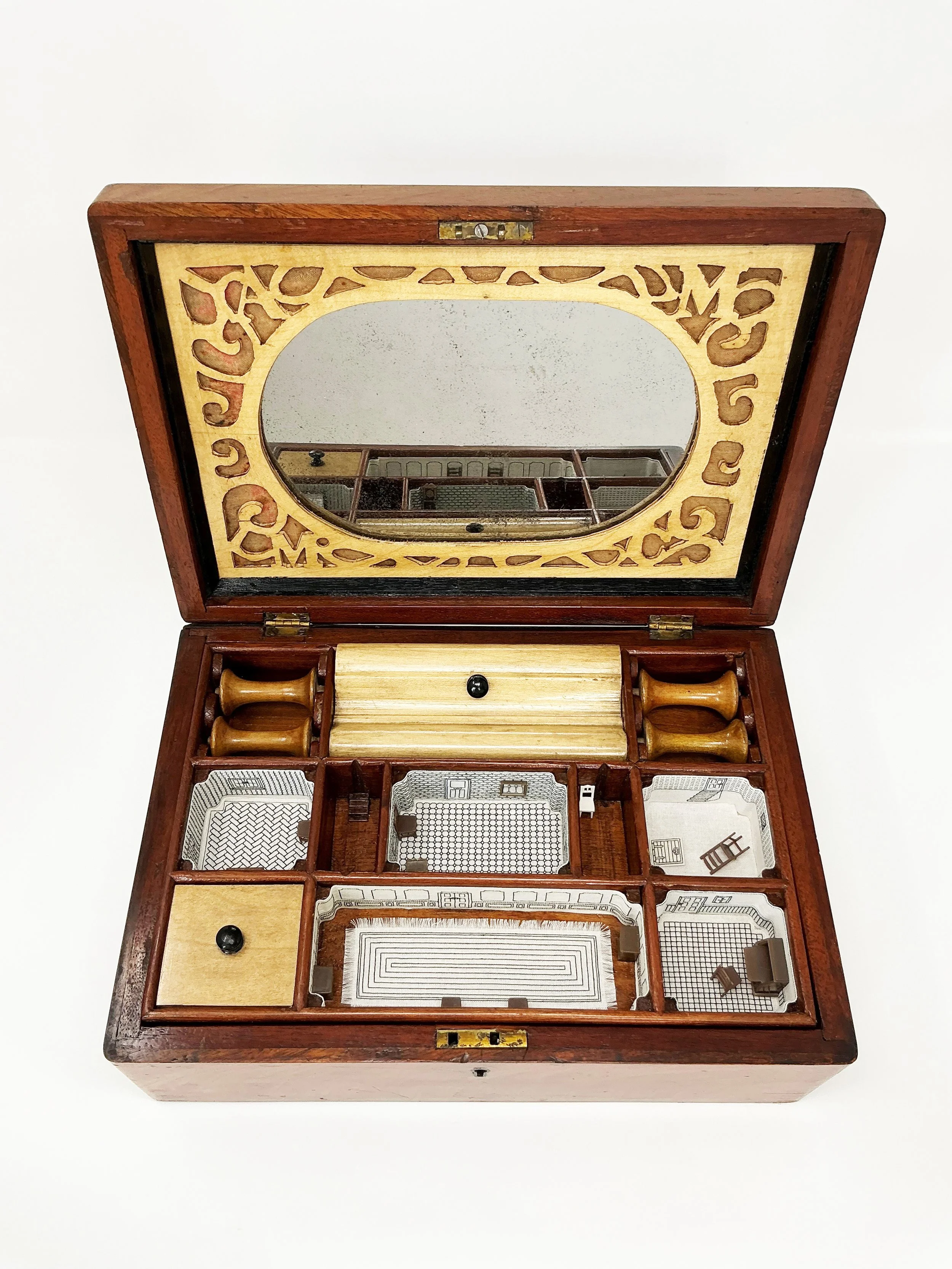
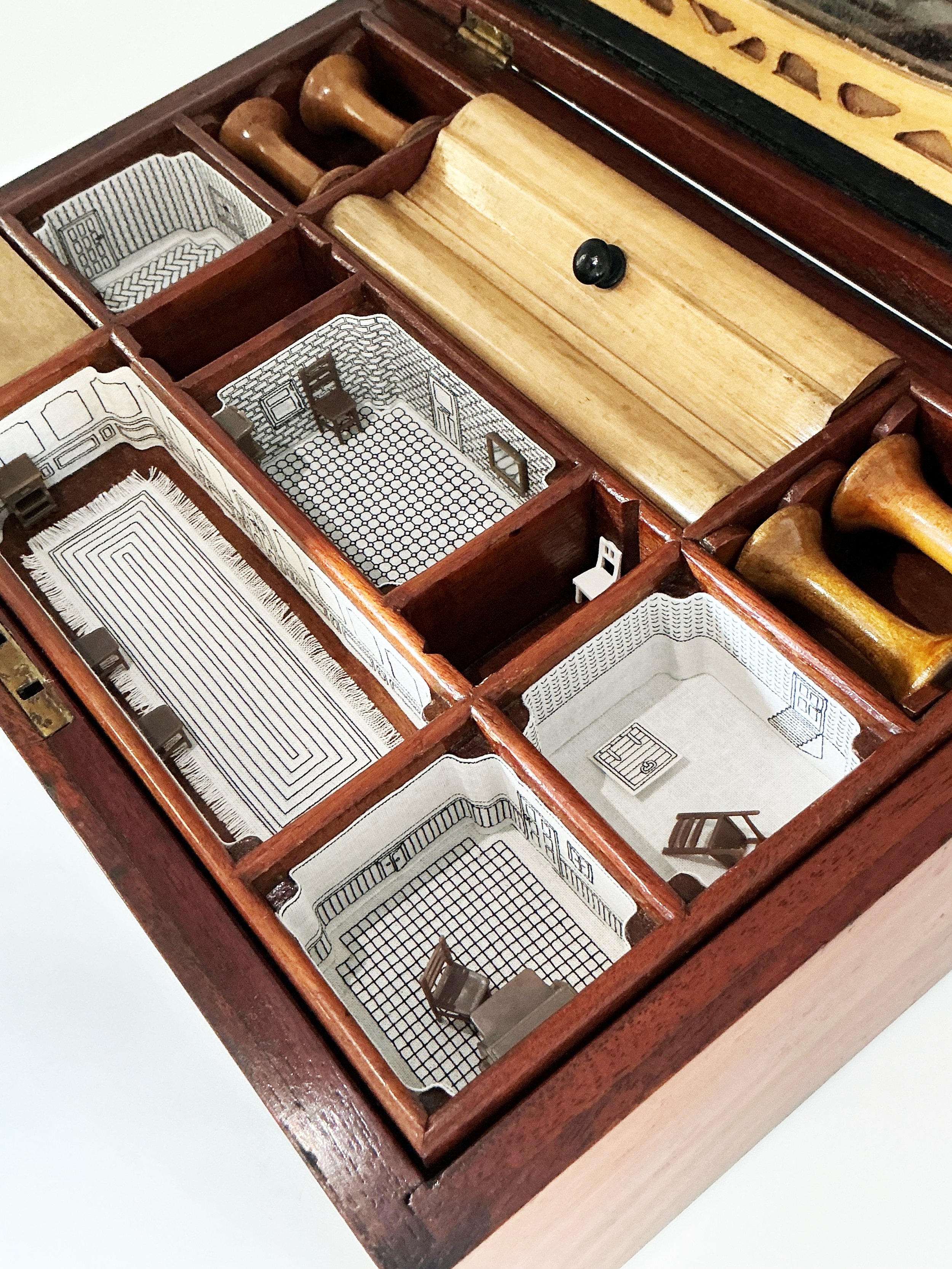
Measurement: 32cm x 31cm x 22.5cm
Process: Hand stitch
Materials: Antique sewing box (c.1892), textile, silk thread, miniature furniture